Skin
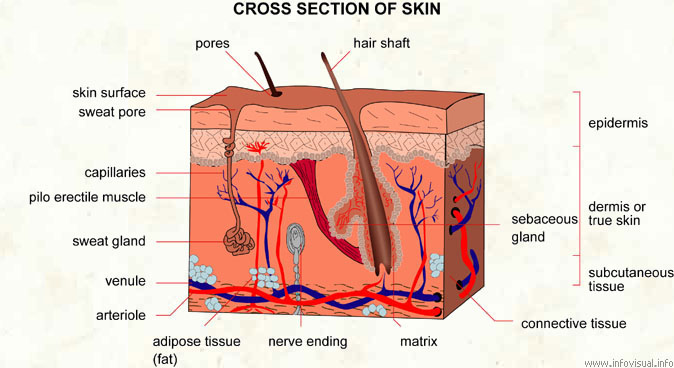
Pores: minute holes from which sweat and sebum are secreted.
Hair shaft: a filament that grows from the skin.
Epidermis: outer layer of the skin.
Dermins or true skin: middle layer of the skin.
Sebaceous gland: gland that secretes sebum, which lubricates the skin and hair.
Subcutaneous tissue: deep subcutaneous layer.
Connective tissue: tissue that consists of cells and fibres and which connects and supports.
Matrix: cells that allow hair growth copyright bernard dery infovisual.
Nerve ending: part of the skin that senses stimuli.
Adipose tissue (fat): fat-producing cells.
Arteriole: network of blood vessels that carries blood from the heart to the organs.
Venule: network of blood vessels that carries blood from the organs to the heart.
Sweat gland: gland that produces and secretes sweat.
Pilo erectile muscle: muscle that elevates the hair.
Capillaries: blood vessels that allow the exchange of various nutriments and wastes among cells.
Sweat pore: minute hole that secretes perspiration.
Skin surface: top of the epidermis.
Photo :
EN : Human
skin
FR : Peau
humaine
ES : Piel
humana
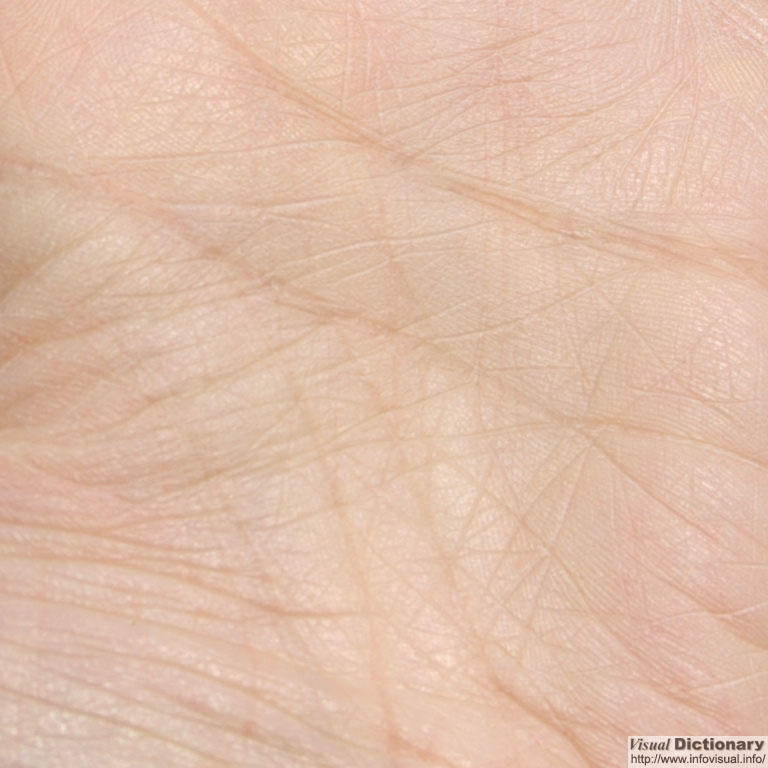
Humain skin is the largest organ of the integumentary system made up of multiple layers of epithelial tissues that guard underlying muscles and organs. As the interface with the surroundings, skin plays the most important role in protecting.